China Best Conflict Free Gemstones for Engagement Rings?

Time:2026-09-26 Author:Isabella
0%

Choosing an engagement gemstone in China should begin with more than color, clarity, and price. Buyers also need evidence about origin, cutting, and the people behind the supply chain. What are the best conflict-free gemstones for engagement rings? The strongest options often include traceable sapphires, recycled diamonds, responsibly sourced spinel, and lab-grown stones. None is automatically ethical. Ask for written origin details, treatment disclosures, and a return policy before paying.

The Kimberley Process’s 2022 Global Summary reported about 119.6 million carats of rough diamond production, worth roughly US$16.4 billion. That scale makes supply-chain checks important, but the Kimberley Process applies to rough diamonds—not colored stones or every human-rights concern. The OECD Due Diligence Guidance for Responsible Supply Chains of Minerals offers a broader framework for identifying and addressing risks. GIA research gemologist Dr. James Shigley’s work on gemstone origin supports an important distinction: identifying where a gem formed does not establish how every supplier handled it. In other words, origin is not an ethics certificate.

Look closely. Ask for invoices, independent grading, and supplier documentation that connects the stone to its source. A Montana sapphire with a named mine may offer a clearer trail than an attractive stone with vague paperwork. Still, paperwork can be incomplete, and “conflict-free” labels may conceal gaps. The aim is not perfect certainty. It is a ring whose beauty comes with evidence—and questions worth asking.
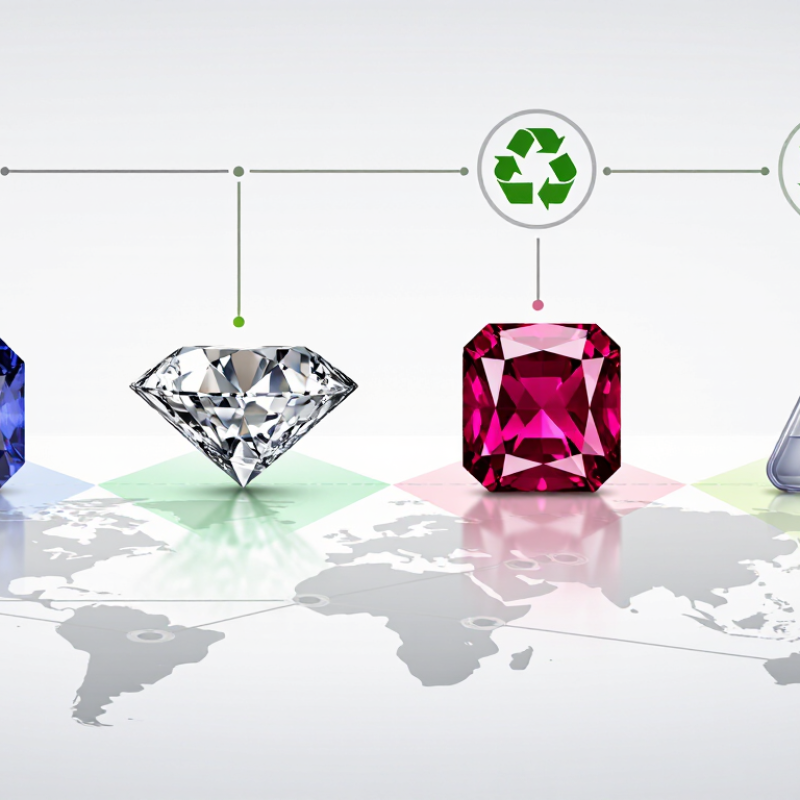
China Best Conflict Free Gemstones for Engagement Rings?

Understanding Conflict-Free Gemstones and Ethical Sourcing

Conflict-free sourcing is more than a label. For an engagement ring, ask where the stone was mined, cut, and traded, and whether those stages can be traced. The Kimberley Process recorded about 111.5 million carats of rough diamond production in 2023. Its controls address conflict diamonds, but do not verify every labor or environmental condition. Colored gemstones also have varied supply chains, so diamond-focused figures cannot describe their risks.

The OECD’s 2016 Due Diligence Guidance recommends a five-step framework, including identifying supply-chain risks and reporting how they are addressed. Ask a seller for a written origin disclosure, chain-of-custody records, and details about worker protections. For a sapphire, for example, a named mining region is more useful than “responsibly sourced.” Still, records can be incomplete, and a polished stone may pass through several traders. No certificate tells the whole story. That gap deserves honest discussion.

Tips: Request documents before paying, and ask what “conflict-free” means for that specific stone. Check whether the claim covers only armed-conflict links or also wages, safety, and environmental practices. Keep the answers with your ring records.

China’s Role in the Gemstone Market

China’s gemstone market connects mining regions, cutting workshops, wholesalers, and jewelry makers. The country is both a major jewelry-manufacturing hub and a large consumer market. In cities such as Shenzhen, skilled workers may shape, polish, and set stones for many kinds of rings. A gemstone sold through a Chinese supplier may have been mined and cut in different countries. The route can be complicated.

For an engagement ring, “conflict-free” should describe a documented supply chain, not simply the seller’s location. Ask where the stone was mined, where it was cut, and what records support those answers. Ask for specifics. Request invoices, origin statements, or independent gem reports when available. These documents can clarify a stone’s identity and treatment, though they may not prove every step of its journey. That distinction matters. Colored stones often pass through several hands, and records can be incomplete. Some stones have stronger traceability than others. A careful buyer should compare the seller’s claims with the paperwork and ask directly about gaps. Records vary. This may be less convenient, but it is more reliable than treating a label as proof of origin.

China Best Conflict-Free Gemstones for Engagement Rings? — China’s Role in the Gemstone Market
Gemstone or option Common supply or production context China’s market role Conflict and sourcing considerations Engagement-ring suitability
Laboratory-grown sapphire Synthetic sapphire is made in several countries using industrial crystal-growth methods. China is among the countries with synthetic-gemstone manufacturing capacity and a substantial jewelry-processing sector. Laboratory growth avoids newly mined gemstone material, but does not by itself verify factory conditions, energy use, or the accuracy of a seller’s disclosure. A durable option for everyday wear; sapphire has Mohs hardness 9. Request clear disclosure that it is laboratory-grown.
Natural sapphire Commercial sources include Sri Lanka, Madagascar, and other mining regions; origin varies by stone. China participates in gemstone importing, trading, cutting, jewelry production, and retail; it is not the principal source of the world’s natural sapphires. Country of origin alone cannot establish that a stone is conflict-free or responsibly mined. Ask for documented supply-chain information where available. Good everyday-wear potential with appropriate setting and care; hardness 9.
Natural ruby Ruby deposits occur in several countries, including Myanmar, Mozambique, and Madagascar. China is a significant trading and jewelry-market participant, while much natural ruby supply is mined elsewhere. Some origins have heightened human-rights, governance, or sanctions concerns. Myanmar-related restrictions and rules can change; verify current requirements and traceability before purchase. Hardness 9, making ruby suitable for frequent wear, though inclusions and treatments should be assessed.
Natural emerald Major sources include Colombia and Zambia, among other producing countries. China is a market, trading, and jewelry-manufacturing hub rather than the main source of internationally traded emeralds. Mining conditions and traceability vary by source. Treatments are common, so request disclosure of treatments and any available origin documentation. Mohs hardness is 7.5–8, but inclusions can make emeralds more vulnerable to impact; a protective setting is advisable.
Recycled or previously owned gemstone Recovered from existing jewelry or recut from previously mined material; availability depends on the stone and condition. Can be traded, recut, or set by businesses in China as well as in other jewelry markets. Reuse avoids demand for newly mined gemstone material, but the original mine and earlier supply chain may remain unknown. Potentially suitable if the stone is inspected for damage, treatments, and durability before setting.
Diamond (natural or laboratory-grown) Natural diamonds are mined in multiple countries; laboratory-grown diamonds are produced in industrial facilities worldwide. China is an important diamond-processing and jewelry-market participant and has a substantial laboratory-grown diamond industry. The Kimberley Process applies to international trade in rough diamonds and is not a universal guarantee of ethical sourcing. Laboratory-grown status avoids mine-origin issues but does not establish overall environmental or labor performance. Diamond has Mohs hardness 10. Confirm whether it is natural or laboratory-grown and request reliable grading and sourcing disclosures.

Note: “Conflict-free” is not a universal certification for colored gemstones. Ask for the stone’s natural or laboratory-grown status, treatment disclosure, available origin and chain-of-custody records, and independently verifiable documentation.

Popular Conflict-Free Gemstones for Engagement Rings

Popular Conflict-Free Gemstones for Engagement Rings

Sapphires and spinels offer rich color, while emeralds bring a vivid green that looks striking against a simple setting. Moissanite is another option, and lab-grown sapphires can reduce concerns about mine-level sourcing. Still, “conflict-free” is not a guarantee of ethical production. The World Bank and Pact’s 2019 State of the Artisanal and Small-Scale Mining Sector report estimated that about 40.5 million people worked in artisanal and small-scale mining worldwide. The figure covers many minerals, not gemstones alone, but it shows why tracing a stone’s origin can be difficult. A polished gem may have a less transparent journey than its display suggests.

Ask the seller for the gemstone’s country of origin, supplier documentation, and any available chain-of-custody or independent audit records. For lab-grown stones, ask how production is verified and what energy sources are used. No sourcing system is perfect, and a label by itself is not proof. I would treat vague answers as a reason to pause, not as evidence of wrongdoing.

Tips: Request written sourcing details before choosing a stone. Compare the exact gem’s color and inclusions in daylight; a tiny green or blue shift can change how the ring feels.

Popular Gemstone Options for Engagement Rings

Mohs hardness indicates resistance to scratching, not overall toughness. Emerald and morganite are shown at the midpoint of their commonly cited hardness ranges (7.5–8). A gemstone’s type alone cannot establish that it is conflict-free; ask for verifiable information about its origin and supply chain.

Comparing Gemstones by Durability, Beauty, and Price

Choosing a conflict-free gemstone means weighing durability, appearance, and budget—not just color. Sapphire rates 9 on the Mohs scale, making it a practical choice for frequent wear. It comes in many colors, and inclusions can give each stone a distinct look. Ruby is similarly hard, though vivid, clean stones can cost more. Emerald offers rich green color, but its typical inclusions and treatments deserve careful disclosure. It is less forgiving of knocks and daily wear.

Prices vary with color, size, clarity, treatment, and origin, so a simple “best value” ranking can mislead. A smaller, well-cut sapphire may look brighter than a larger, duller one. Morganite and spinel can be appealing alternatives, but their scratch resistance and color preferences differ. Ask the seller for written details about treatments and sourcing, plus any available traceability records. “Conflict-free” claims are not equally specific; documentation matters. I would not treat a label alone as proof.

Tips: View the stone in daylight and indoor lighting. Ask how it should be cleaned and repaired. For a ring worn every day, prioritize a protective setting and a gemstone suited to regular contact. Leave room in the budget for a secure setting; it is easy to focus only on the center stone.

How to Verify a Gemstone’s Origin and Supply Chain

A gemstone’s sparkle cannot reveal where it came from. Ask the seller for its country of origin and a written account of how it moved from source to cutting and sale. A gemological report can help confirm whether a stone is natural or treated, but it does not automatically prove its origin. Keep those questions separate.

Look for dated invoices, supplier declarations, and batch numbers that connect records to the specific stone. Check that the stone’s description, weight, and identifying details match across documents. For a mounted gem, ask whether the records were created before setting. Keep the paperwork. If an independent gemologist is available, ask what the report verifies and what it cannot verify.

A clear supply chain should identify each known handoff, not rely on a vague “ethical” label. In practice, records can be incomplete; that is a reason to pause and ask for clarification, not proof of wrongdoing. If answers remain unclear, consider another stone. The extra questions may feel awkward, but they make an engagement-ring purchase more informed.

FAQS

What does “conflict-free” mean for a gemstone?

It may only address links to armed conflict. Ask whether the claim also covers worker safety, wages, and environmental practices.

What documents should I request before buying a gemstone?

Ask for a written origin disclosure, dated invoices, supplier declarations, and batch numbers. Keep the answers with your ring records.

Does a gemological report prove where a stone came from?

Not necessarily. It may confirm whether a stone is natural or treated, but it does not automatically verify its origin.

How can I check that paperwork matches the specific stone?

Compare the stone’s description, weight, and identifying details across its records. Small mismatches deserve a question.

What makes a gemstone’s origin information useful?

A named mining region is more helpful than a vague “responsibly sourced” claim. For a sapphire, ask which region is listed.

Should I ask about a gemstone’s journey from mine to seller?

Yes. Ask who handled it between its source, cutting, and sale. Some handoffs may not be documented.

What if the gemstone is already set in a ring?

Ask whether its records were created before setting. Keep the paperwork.

What should I do if the seller’s answers are unclear?

Ask for clarification and consider another stone if uncertainty remains. It can feel awkward. Records are not perfect, either.

Conclusion

Choosing a conflict-free gemstone for an engagement ring means considering both its beauty and the conditions under which it was mined, cut, and traded. China plays an important role in the global gemstone market through its trading, processing, and jewelry sectors, while buyers can explore options such as sapphires, rubies, emeralds, and responsibly sourced diamonds. What are the best conflict-free gemstones for engagement rings depends on personal style, budget, and how the ring will be worn.

Compare each stone’s durability, color, clarity, and price before deciding. Sapphires are known for their hardness and range of colors, while other gems offer distinctive hues and may require gentler care. To assess a stone’s origin and supply chain, ask the seller for clear sourcing information and relevant documentation, and look for consistent details about its journey from source to finished gem. These steps can help buyers make a thoughtful choice that balances lasting wear, appearance, and ethical sourcing.

Isabella

Isabella

Isabella is a dedicated marketing professional with a sharp focus on driving brand growth and engagement through strategic content creation. With an extensive background in digital marketing, she combines her passion for storytelling with her keen understanding of industry trends to deliver......