Choosing a wedding band for a halo ring requires more than matching metal colors. The halo’s surrounding diamonds can make the engagement ring look wider, taller, and more dramatic. A straight wedding band may sit neatly beside it, but a curved or contoured band can follow its outline more closely. Small details matter. Check the gap. Notice the height. Feel the edges.
For anyone wondering, “How to choose a wedding band that complements a halo ring,” jewelry stylist Michael O’Connor offers a helpful reminder: “There are no rules when it comes to mixing metals.” His advice supports a practical approach rather than a rigid formula. Platinum beside yellow gold can create intentional contrast. A pavé band can echo the halo’s sparkle, while a plain polished band may give the design breathing room. Try both.
Comfort should guide the final decision. Place the rings together and move your hand naturally. Do they pinch? Does the halo tilt? These problems often appear after several minutes, not during a quick showroom fitting. Ring height also deserves attention, especially with a raised center stone. A poorly matched band can rub against the setting or leave an awkward shadow.
The perfect pairing may not be perfectly symmetrical. That is worth remembering. Personal style, daily work, and future resizing needs should influence the choice. A trusted jeweler can measure the profile, inspect the setting, and explain practical trade-offs clearly. The goal is balance: a wedding band that supports the halo ring without competing for attention.
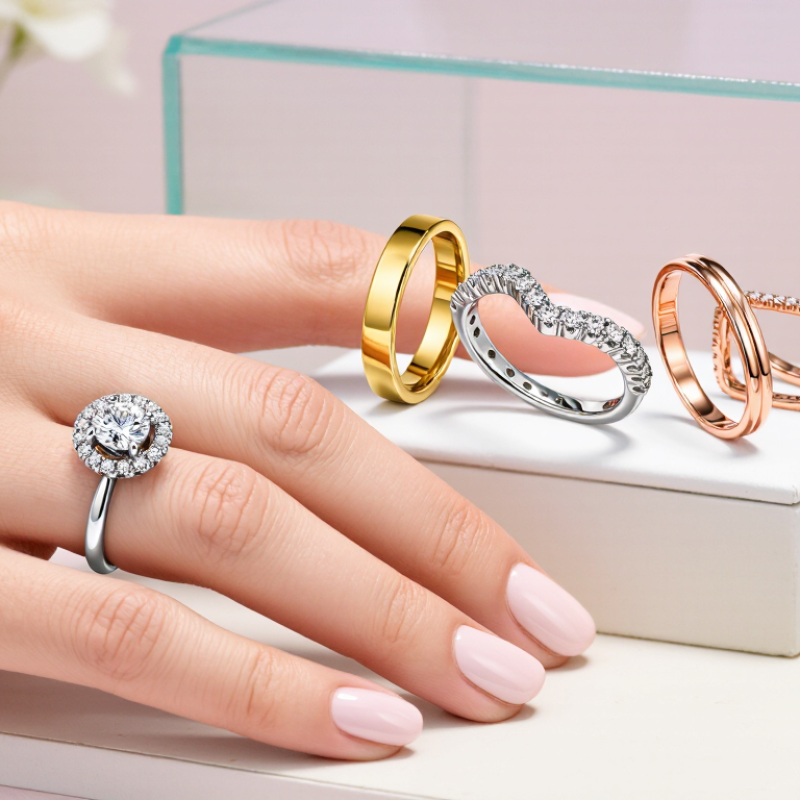
How to Choose a Wedding Band for a Halo Ring?
A halo ring changes wedding band fit because its surrounding stones often extend beyond the center stone. The halo may also sit low against the finger. A straight band can then press against the setting or leave a visible gap. GIA explains that setting height and prong design directly affect a ring’s wearability. The Knot’s 2023 Real Weddings Study, based on nearly 10,000 U.S. couples, reported an average engagement-ring spend of $5,500. Fit deserves attention before protecting that investment.
Try the engagement ring and wedding band together, preferably later in the day. Fingers can swell slightly after walking, heat, or salty meals. A curved, contoured, or notched band may follow the halo more closely. A straight band offers a cleaner look but may create spacing. Wider bands can also feel tight beside a halo ring. I once assumed a small gap meant poor workmanship. It can be intentional, yet it may collect dust and bother you during daily wear. There is no universally perfect pairing.
Tips: Ask a qualified jeweler to check the setting height, stone contact, and metal clearance. Test the rings while bending your finger. Spin the band gently. If it catches, the design needs reconsideration. Bring photos of your preferred stack, but trust the physical fit more than the image. A temporary spacer can help you compare proportions before ordering.
How to Choose a Wedding Band for a Halo Ring?
Identifying a wedding band style begins with the halo’s outline. A straight band may leave a visible gap beneath a low-set halo. That space can look intentional, or slightly unfinished. A contoured or notched band usually follows the engagement ring more closely. It can frame the center stone without pressing against the setting. During fittings, I check the side profile, not only the view from above. A thin ruler or fitting band can reveal contact points around the gallery.
Pavé bands add continuous sparkle around a halo ring. They work well when the engagement ring already has delicate, matching details. However, closely set stones may require more care during daily wear. A plain polished band creates contrast and often feels calmer beside a detailed halo. Mixed textures can also be attractive, though they are harder to balance. Too many finishes may make the set look accidental. Metal color matters as well. Matching metals provide a unified appearance, while contrasting tones emphasize each ring’s shape.
Comfort should guide the final choice. A curved band may fit neatly but feel less flexible for future stacking. A straight band offers versatility, yet it may rub against the halo’s edge. Try both rings together while moving your hand naturally. Check for pinching, spinning, and exposed prongs. Ring proportions are personal, and standard rules sometimes fail. An experienced jeweler can measure clearance and inspect possible friction points. Still, your own hand should make the final decision.
A halo ring often sits higher than expected. Its center stone and surrounding diamonds need enough clearance for a wedding band. Place both rings together before choosing a style. Check whether the band touches the halo, gallery, or prongs. Even a tiny gap can prevent rubbing and trapped debris.
Measure the ring’s height with a jeweler’s gauge or digital calipers. Record the lowest point beneath the center stone, not only the visible setting. Then compare the band’s profile.
A low-profile band may stop against the halo. A contoured or curved band can follow its outline more naturally. A straight, high-profile band may create a flush fit, but it can feel bulky.
Finger shape and swelling also matter. Try the pair later in the day.
Tips: Bring the exact halo ring to a qualified jeweler. Ask for measurements in millimeters. Test several band widths, including a slim option and a sturdier profile. Rotate your hand and close your fingers. Notice pressure at the knuckle. If the rings touch, ask whether the contact is safe or likely to cause wear. Soldering may improve stability, but it makes future resizing less flexible. A perfectly matched gap is not always necessary. Comfort and protection deserve equal attention. It is tempting to choose the prettiest band first. That choice can be wrong after real movement, temperature changes, and daily wear.
Choosing a wedding band for a halo ring begins with proportion. A halo setting already adds visual width, so a thin, highly curved band can disappear beside it. A 2024 U.S. wedding-industry study reported average engagement-ring spending of $5,500, making fit and daily wear important investments. Test the ring and band together under natural light. Store lighting can be deceptive.
Metal changes the entire mood. Matching platinum with platinum creates a quiet, seamless line, while yellow gold adds deliberate contrast. White gold can look similar at first, but its surface finish may change with wear. Ask a jeweler about hardness, maintenance, and plating before deciding. The World Gold Council’s 2024 market data showed gold demand remained strong, with jewelry demand exceeding 2,000 tonnes globally. That interest does not make every gold alloy equally practical.
Shape matters most around the halo’s base. A contoured, shadow-band design usually follows the setting more closely than a straight band. Try both. A straight band may leave a small gap, which some wearers prefer for a lighter, modern appearance. Pavé details can echo the halo, but matching every stone may look overly busy. I have seen beautiful rings feel uncomfortable because the band pressed against the halo. Comfort is easy to underestimate. Measure the profile, check finger movement, and question whether perfect coordination matters more than effortless wear.
| Consideration | What to Check on the Halo Ring | Suitable Wedding Band Choices | Coordinated Look | Fit and Wearability Notes |
|---|---|---|---|---|
| Metal Color | Identify whether the halo, shank, and visible prongs are yellow gold, white gold, rose gold, platinum, or a mixed-metal combination. | Matching metal Two-tone pairing Contrasting metal | A matching metal creates a seamless appearance. A two-tone or contrasting combination adds definition and can connect the ring to other jewelry. | White gold is commonly rhodium-plated and may need periodic replating. Platinum and gold have different densities, durability characteristics, and maintenance requirements. |
| Metal Durability | Consider the everyday wear level, the setting height, and whether the halo ring already has delicate milgrain, pavé, or fine details. | Platinum 18k gold 14k gold | Using metals with a similar visual finish makes the set look intentional, while a difference in surface wear can create a subtly mismatched appearance over time. | Platinum is dense and naturally white. 14k gold generally contains more alloy than 18k gold and is often chosen for increased hardness. All precious-metal alloys can scratch with use. |
| Band Profile | Check whether the center stone or halo extends low toward the finger and whether the engagement ring has a straight or elevated gallery. | Straight band Contoured band Notched band | A straight band gives a clean, classic line. A contoured or notched band can follow the outline of a low-set halo and reduce visible gaps. | A contoured band is shaped around the engagement ring. A notched band has a more defined indentation and may require precise matching to the halo’s dimensions. |
| Band Shape | Observe whether the halo is round, oval, cushion, pear, emerald, or another outline, and note its widest points. | Rounded contour Soft curve Geometric contour | Softly curved bands complement round and oval halos. More angular bands can echo emerald-cut, radiant, or geometric halo outlines. | The visual match is more important than copying the exact center-stone shape. The band should sit comfortably without pressing against the halo or side stones. |
| Band Width | Compare the width of the engagement-ring shank and the visual weight of the halo. | About 1.5–2.0 mm About 2.0–3.0 mm Wider statement band | A slimmer band looks delicate and keeps attention on the halo. A wider band balances a large halo and creates a more substantial stack. | The ideal width depends on finger size, ring proportions, comfort, and stone-setting structure. Very slim pavé bands may require more care during daily wear. |
| Surface Finish | Check whether the halo ring is polished, brushed, satin-finished, milgrain-edged, or intentionally antique-looking. | High polish Satin or matte Milgrain detail | Matching finishes create a unified look. Mixing polished and matte surfaces adds contrast while keeping the design coordinated. | Polished surfaces reflect more light and show fine scratches more readily. Brushed and matte finishes can also change appearance as they wear and may need refinishing. |
| Stone Setting | Look for pavé, shared-prong, channel, bezel, or bead-set details on the halo and shoulders. | Plain metal Matching pavé Channel-set accents | A plain band emphasizes the engagement ring. A diamond-set band creates more sparkle and visually extends the halo’s detail around the finger. | Stone-set bands may need periodic inspection to check for loose stones or worn settings. A plain band generally offers a simpler maintenance routine. |
| Band Height | Measure the space beneath the halo and check whether the engagement ring’s gallery sits high enough for a flush fit. | Low-profile band Raised band Open-gap design | A flush-fitting pair appears streamlined. A deliberate gap can highlight the halo’s outline and create a lighter, more modern stack. | Do not force two rings to sit flush. Contact between settings can cause rubbing, scratches, or pressure on delicate prongs and side stones. |
| Design Language | Identify the main style cues: vintage, minimalist, romantic, modern, geometric, or nature-inspired. | Matching motif Simple contrast Mixed but balanced | Repeating one detail—such as milgrain, engraving, curves, or beadwork—makes different rings feel like a coordinated set. | Matching every detail is not required. Repeating one or two design elements usually provides cohesion without making the stack look overly uniform. |
| Comfort and Sizing | Consider the combined height, total width, finger curvature, and how easily the rings move during daily activities. | Rounded comfort edge Low-profile design Try-on stack | A comfortable pair looks polished because the rings remain aligned and are less likely to be removed during everyday wear. | The correct ring size can vary with temperature, time of day, and band width. Test both rings together before finalizing the fit. |
| Best General Match | Use the halo’s metal, outline, setting height, and decorative details as the primary reference points. | Same metal Compatible contour Related detail | The most balanced pairing usually combines a compatible profile, a related metal finish, and one repeated design element. | A professional fitting is recommended when the halo is low-set, heavily detailed, asymmetrical, or likely to touch the wedding band. |
General guidance only: exact compatibility depends on the individual ring’s measurements, setting construction, and finger fit. Have both rings checked together before purchase or final sizing.
How to Choose a Wedding Band for a Halo Ring?
A halo ring needs a band that clears its side stones. Try both rings together, not separately. The band should sit flush without pushing the engagement ring upward. Walk, type, and clasp a jacket while wearing them. Ten minutes can reveal pressure that a mirror hides. I would also check the ring after seasonal swelling. Fingers often feel tighter in warm weather.
Comfort depends on shape, weight, and exposed edges. A rounded interior can reduce rubbing, especially for daily wear. Thin pavé bands may look delicate, but their small settings need regular inspection. GIA explains that diamond hardness measures scratch resistance, not overall toughness. A diamond can still chip around vulnerable edges. That distinction matters near a halo’s side stones. Choose a band with secure settings and enough metal between stones.
Durability also depends on metal and maintenance. Platinum is dense and develops a visible patina, while gold can show wear sooner, depending on karat and alloy. The Knot’s 2024 Real Weddings Study surveyed nearly 17,000 U.S. couples, reflecting how widely personal priorities shape ring choices. Cost should not replace comfort testing. A practical check is simple: slide a thin piece of paper between the bands. If it catches repeatedly, the design may snag during ordinary work. Ask a qualified jeweler to inspect prongs and alignment yearly. Even careful choices can need adjustment.
Comparing common band widths for comfort, durability, and long-term wearability.
The scores use a practical 1–5 design index rather than laboratory measurements. A 2.0–2.5 mm band generally offers a balanced combination of everyday comfort, structural strength, and visual proportion beside a halo setting. Wider bands provide greater durability but may feel heavier and less discreet.
Its surrounding stones may extend beyond the center stone. The setting can also sit low. A straight band may press against it or leave a gap. Fit is personal.
Curved, contoured, or notched bands often follow the halo’s outline. A straight band gives a cleaner look but may create spacing. Slim profiles can feel less crowded beside wider halos.
Yes. Bring the exact halo ring to a qualified jeweler. Try several band widths and profiles together. Pictures can mislead you. Physical fit matters more.
Try the rings later in the day. Fingers may swell after walking, heat, or salty food. Bend your finger and close your hand. Notice pressure near the knuckle.
Ask a jeweler to measure the setting in millimeters. Check the lowest point beneath the center stone. Inspect contact with the halo, gallery, and prongs. Do not guess.
No. A small gap can prevent rubbing and trapped debris. It may also collect dust and annoy you during daily wear. I once assumed every gap showed poor workmanship. That assumption was wrong.
Spin the band gently and rotate your hand. If it catches, reconsider the design. Ask whether the contact is safe or likely to cause wear. A temporary spacer can help compare proportions.
Soldering may improve stability during daily wear. However, it can make future resizing less flexible. Consider your long-term plans before choosing it. Stability is helpful, but permanence deserves thought.
Choosing a wedding band for a halo ring requires more than matching the center stone’s style. The surrounding halo can add width and height, which may affect how closely a band sits against the engagement ring. To understand how to choose a wedding band that complements a halo ring, first consider the ring’s profile, setting height, and available clearance. Curved, contoured, notched, or gently curved bands may fit around the halo more naturally, while straight bands can create a deliberate stacked look with a small gap.
A well-coordinated pairing should balance metal color, band shape, texture, and overall proportion without overpowering the halo. Measure both rings carefully and test how they align when worn together. Comfort, durability, and long-term practicality are equally important, so avoid designs that pinch the finger, catch on clothing, or place excessive pressure on delicate settings. The best choice is a wedding band that feels secure, complements the halo’s character, and remains comfortable for everyday wear.