What makes a jewelry brand "premium" vs "commercial" in China is rarely decided by price alone. A commercial brand may offer accessible designs, frequent promotions, and wide distribution. A premium brand builds stronger meaning around each piece. Its value appears in materials, craftsmanship, service, heritage, and controlled availability.
Jean-Noël Kapferer, a leading luxury-brand scholar, once said, “Luxury is a culture, not a product.” This idea helps explain the Chinese jewelry market. A premium brand does not simply place diamonds in a velvet box. It creates a consistent experience, from the lighting in a Shanghai boutique to the explanation of a gemstone’s origin. Staff should discuss proportion, setting, maintenance, and symbolism without sounding rehearsed. That detail matters.
Trust is equally important. Chinese consumers increasingly compare brand stories, certificates, craftsmanship, and after-sales support before purchasing. A premium label can justify its price through traceable materials, skilled production, private appointments, and meaningful design language. Commercial brands often compete through visibility, convenience, and value. Neither model is automatically inferior.
The boundary is not always clean. A commercial brand can produce an excellent collection, while a premium brand can appear ordinary during a weak retail experience. High prices alone do not create desire. They may only create suspicion.
This article examines the practical signals behind premium positioning in China. It considers design, pricing, distribution, storytelling, customer service, and cultural relevance. The goal is not to praise exclusivity blindly. It is to understand why some jewelry feels enduring, while other pieces feel replaceable.
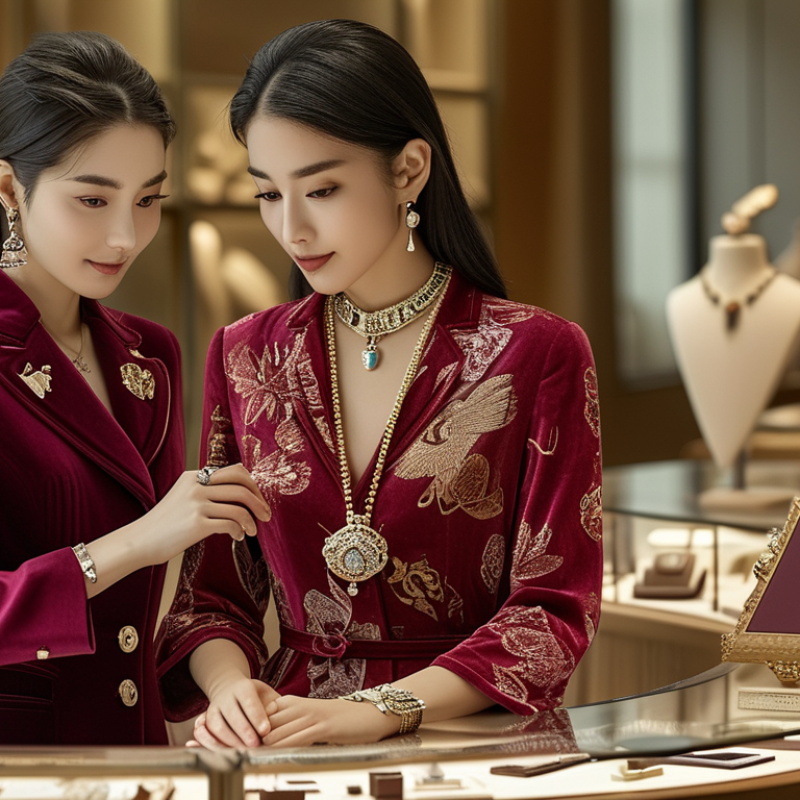
In China, a premium jewelry brand is defined less by a high price than by controlled value. Its design language is recognizable, but not loud. Materials, stone grading, craftsmanship, and service must support the price consistently. A customer may notice a precise clasp, balanced setting, or discreet packaging. These small details build trust. Premium positioning also depends on transparent certificates, clear after-sales policies, and trained staff. Price alone is weak evidence.
A commercial jewelry brand serves broader demand and faster purchase decisions. It often offers familiar styles, accessible materials, frequent promotions, and many retail locations. Its strength is convenience, not necessarily lower quality. In China, commercial products can still be well made. They may suit weddings, gifting, office wear, or seasonal campaigns. Inventory turnover and standardized production usually matter more than limited design or long-term collectability. This definition should not become an insult.
The difference appears across the whole customer journey. Premium brands invest in narrative, customization, fitting, repair, and relationship management. Commercial brands prioritize visibility, selection, speed, and price clarity. However, the boundary is not fixed. A commercial line can become premium through stronger materials and service. A premium label can feel commercial when discounts dominate every conversation. In store reviews, I would examine receipts, staff explanations, product details, and repair responses, not only advertising. My judgment can be imperfect. Chinese consumers are not one audience, and city, age, income, and occasion reshape the meaning of premium.
In China’s jewelry market, premium design begins with restraint. Experienced buyers often notice proportion before decoration. A premium ring may use a slimmer profile, balanced stone spacing, and a clasp that feels almost invisible. Commercial pieces usually follow faster trends and broader sizing needs. They attract attention quickly, but their details can feel repeated.
Materials reveal another difference. Premium jewelry typically states metal purity clearly and provides reliable sourcing information. Gold color should remain consistent across the surface, including edges and hidden joints. Well-cut stones show controlled sparkle, not simply maximum brightness. Natural jade, pearls, and colored stones also require careful grading, because appearance alone can mislead. Documentation matters.
Craftsmanship appears in the quiet places. Look at the prongs, polishing marks, hinge movement, and inner walls. A skilled maker leaves smooth transitions and even settings. Hand-finishing may take longer than machine production, especially for complex textures or delicate chains. Yet “handmade” is not automatically premium. Some handwork still needs better inspection.
In practice, the boundary is not always clean. A commercial piece can use good materials, while a costly piece may have weak finishing. That is where professional evaluation helps. I would examine the item under magnification, test the clasp repeatedly, and ask how repairs are handled. Small imperfections are not always failures. They may show human work, but they should never affect comfort, durability, or trust.
In China, a premium jewelry position is built through meaning, not price alone. Heritage gives a collection a visible timeline: archival sketches, regional craft, and documented material choices. Storytelling then turns those facts into personal value. A customer should understand why a clasp feels distinctive, not merely see a higher number on the tag.
Industry data supports this shift. The World Gold Council reported that China’s gold jewelry demand fell sharply in 2024, reflecting cautious spending and changing consumer preferences. China Gold Association data also showed weaker jewelry consumption during the year. When demand becomes selective, commercial products often compete through discounts and rapid design updates. Premium products need stronger reasons to remain desirable.
Details matter. A boutique may show a craftsperson’s tool marks beside a finished ring. A sales advisor may explain the origin of a motif in two clear sentences. Small evidence builds trust. Yet heritage can become decorative language without proof. That is the uncomfortable weakness. Many narratives sound polished, but few disclose sourcing, production limits, or design development. Bain & Company’s China luxury market research has repeatedly highlighted the importance of authenticity and consumer experience. In practice, premium positioning requires both emotional storytelling and verifiable substance.
What Makes a Jewelry Brand Premium vs Commercial in China?
In China, premium positioning begins with pricing discipline. Bain & Company’s China Luxury Report 2023 estimated that the luxury market grew by 12% that year. Yet higher prices alone do not create prestige. Customers compare materials, craftsmanship, resale confidence, and service before accepting a premium.
Retail channels also shape perceived value. A controlled boutique can offer quiet consultations, careful lighting, and private product handling. A broad marketplace may deliver reach, but frequent discounts can weaken exclusivity. This difference matters in a market where consumers move between livestreams, social commerce, and physical stores. Online convenience attracts attention. In-person trust often closes the sale.
Tips: Keep prices consistent across channels. Train staff to explain stone quality, sourcing, and after-sales care in plain language. Use digital tools to continue the relationship after purchase, not merely to push another product.
Customer experience remains the strongest separator. PwC’s Future of Customer Experience survey found that 73% of consumers consider experience important in purchasing decisions. For jewelry, experience includes appointment speed, repair updates, packaging, and respectful communication. A delayed response can feel more damaging than a small price difference.
The uncomfortable truth is that many “premium” experiences still feel scripted. Customers notice. In my view, brands should measure waiting time, consultation quality, and repeat service, not only sales conversion. Premium is not a louder logo. It is a consistent feeling at every contact point.
The Role of Pricing, Retail Channels, and Customer Experience
| Business Dimension | Premium Positioning | Commercial Positioning | Market Signal |
|---|---|---|---|
| Typical Selling Price per Piece | Approximately RMB 8,000–50,000+ for fine jewelry, depending on gemstone quality, gold weight, craftsmanship, and design exclusivity. | Approximately RMB 300–5,000 for fashion jewelry, entry-level fine jewelry, and standardized gold or silver products. | High |
| Price Architecture | Maintains relatively stable list prices, uses limited private offers, and avoids frequent deep discounting to protect perceived value. | Uses frequent promotions, festival campaigns, coupons, member discounts, and traffic-driven price reductions. | High |
| Average Gross Margin Target | Often targets approximately 55%–75%, supporting higher spending on design, sourcing, store service, packaging, and after-sales care. | Often targets approximately 35%–60%, with profitability depending more heavily on volume, inventory turnover, and promotional efficiency. | Medium |
| Primary Retail Channels | Appointment-based boutiques, high-end shopping centers, selected department stores, private salons, and carefully managed online consultation. | Mainstream shopping malls, e-commerce marketplaces, live-streaming channels, social-commerce platforms, and multi-brand retail networks. | High |
| Store Location Strategy | Prioritizes affluent city districts, luxury retail clusters, premium shopping centers, and locations that support privacy and longer consultations. | Prioritizes high footfall, broad geographic coverage, transport accessibility, and locations with strong promotional traffic. | Medium |
| Sales Consultation Time | Usually 30–90 minutes for considered purchases, including needs discovery, styling advice, material explanation, and product comparison. | Usually 5–20 minutes, emphasizing product visibility, convenience, price comparison, and rapid conversion. | Medium |
| Customization and Bespoke Service | Provides consultations for engraving, stone selection, sizing, made-to-order pieces, redesign, and selected bespoke projects. | Provides limited personalization, such as standard engraving, size changes, color selection, or packaged gift options. | High |
| Product Assortment | Smaller, edited collections with stronger design authorship, limited editions, differentiated materials, and clearer storytelling. | Broader assortment with repeatable designs, seasonal launches, trend-led products, and faster SKU rotation. | High |
| Material and Quality Communication | Explains gemstone characteristics, metal purity, manufacturing methods, provenance documentation, care requirements, and quality limitations in detail. | Focuses on core specifications such as metal type, weight, plating, size, basic certificates, and product-use information. | Medium |
| Packaging and Gifting | Uses coordinated packaging, premium materials, personalized notes, gift consultation, and presentation suitable for milestone occasions. | Uses standardized packaging designed for efficiency, shipping protection, seasonal gifting, and promotional bundles. | Medium |
| After-Sales Services | May include complimentary inspections, cleaning, polishing, resizing support, repair coordination, appointment-based care, and long-term client records. | Usually provides warranty coverage, return or exchange procedures, basic cleaning, and standardized repair policies. | High |
| Digital Customer Experience | Combines content education, private messaging, video consultation, appointment booking, digital certificates, and high-touch follow-up. | Emphasizes search visibility, livestream demonstrations, reviews, promotions, fast response, and one-click purchasing. | High |
| Customer Relationship Model | Builds long-term relationships through private events, birthday or anniversary reminders, purchase history, referrals, and early access to collections. | Relies more on loyalty points, campaign participation, coupons, membership tiers, and repeat purchases driven by convenience or price. | High |
| Core Purchase Motivation | Identity expression, emotional significance, craftsmanship, rarity, trust, social meaning, and milestone gifting. | Affordability, fashion relevance, gifting convenience, promotions, accessibility, and immediate wearability. | High |
| Promotional Intensity | Lower visible discount frequency; uses private previews, limited releases, value-added services, and invitation-only events. | Higher visible promotional frequency; uses Singles’ Day, 618, Lunar New Year, Valentine’s Day, livestream coupons, and bundle pricing. | High |
| Inventory and Supply Chain | Lower SKU volume, longer development cycles, tighter quality control, selective production, and greater tolerance for made-to-order fulfillment. | Higher SKU volume, standardized production, faster replenishment, broader supplier networks, and stronger focus on inventory turnover. | Medium |
| Trust-Building Mechanisms | Transparent sourcing, credible certification, consistent service, professional consultants, detailed product education, and reliable repair support. | Platform ratings, customer reviews, transaction guarantees, clear specifications, return policies, and competitive pricing. | High |
| Typical Conversion Pattern | Lower traffic but higher average order value, longer decision cycles, stronger consultation dependence, and greater referral potential. | Higher traffic, faster decisions, lower average order value, greater price sensitivity, and stronger dependence on platform visibility. | High |
| Strategic Success Metric | Client lifetime value, repeat purchase quality, referral rate, full-price sell-through, average order value, and service satisfaction. | Sales volume, conversion rate, customer acquisition cost, promotional return on investment, inventory turnover, and marketplace ranking. | High |
Note: The figures are indicative China-market benchmark ranges for strategic comparison rather than audited company results. Actual performance varies by jewelry category, material mix, city tier, retail format, sourcing model, and customer segment.
Chinese jewelry consumers are becoming more selective. Premium no longer means a higher price alone. It suggests traceable materials, skilled finishing, original design, and dependable after-sales service. Bain & Company’s 2024 China Luxury Report describes a cautious market shaped by value-conscious purchasing and stronger expectations for quality.
Market data shows this pressure clearly. The China Gold Association reported 985.31 tonnes of gold consumption in 2024, down 9.58% year on year. Gold jewelry consumption fell to 532.02 tonnes, a 25.23% decline.
This does not mean demand disappeared. It suggests buyers are postponing weak purchases and choosing pieces with clearer emotional or practical value. The China Gold Association’s figures also remind us that category growth can hide changing motivations.
Design still matters, but it must feel relevant to Chinese lifestyles. Lightweight pieces, daily-wear flexibility, and meaningful customization can support a premium perception. Service must feel human, not scripted.
Online reviews, livestream explanations, and transparent certificates also shape judgment before store visits. However, the market remains uneven. Some consumers equate rarity with quality, while others see rarity claims as marketing.
Even expensive packaging can feel empty when craftsmanship is difficult to verify.
: Premium value comes from consistent materials, stone grading, craftsmanship, design, and service. Price alone proves little. A precise clasp can matter.
No. Buyers may check certificates, setting quality, repair policies, and staff explanations before purchasing. Packaging cannot replace evidence.
Commercial brands serve broad demand through familiar styles, accessible materials, promotions, and convenient store locations. Convenience is their strength.
Not necessarily. Commercial pieces can be well made and suitable for weddings, gifts, office wear, or seasonal purchases.
They increasingly examine material traceability, finishing, design originality, customization, and after-sales support. Bright lighting reveals details.
Gold consumption reached 985.31 tonnes in 2024, while total consumption declined 9.58% year on year. Gold jewelry consumption fell more sharply. Some buyers now delay uncertain purchases.
Lightweight construction, daily-wear flexibility, meaningful customization, and dependable repair service can strengthen perceived value.
Premium services often include fitting, customization, repairs, and relationship management. Commercial services emphasize selection, speed, visibility, and clear prices.
Yes, stronger materials, distinctive design, transparent information, and better service may change its position.
Yes. Constant discounts can weaken exclusivity and make quality claims feel less convincing. My judgment may be imperfect.
What makes a jewelry brand "premium" vs "commercial" in China? The distinction is shaped by more than price. Premium jewelry brands typically emphasize original design, carefully selected materials, refined craftsmanship, limited production, and consistent quality. Their value often comes from a clear heritage, meaningful storytelling, and a strong sense of cultural or artistic identity. Commercial jewelry brands, by contrast, tend to focus on accessible pricing, scalable production, familiar styles, and broad appeal, making their products easier to purchase for everyday wear and gifting.
Pricing, retail channels, and customer experience also influence how a brand is positioned. Premium brands may rely on selective stores, personalized service, distinctive packaging, and a carefully designed shopping journey, while commercial brands often prioritize convenience, availability, and efficient retail coverage. As Chinese consumers become more knowledgeable and individualistic, perceptions are changing: authenticity, design originality, responsible production, and emotional relevance increasingly matter alongside material value. This evolution is creating more nuanced opportunities between traditional luxury and mass-market jewelry.
